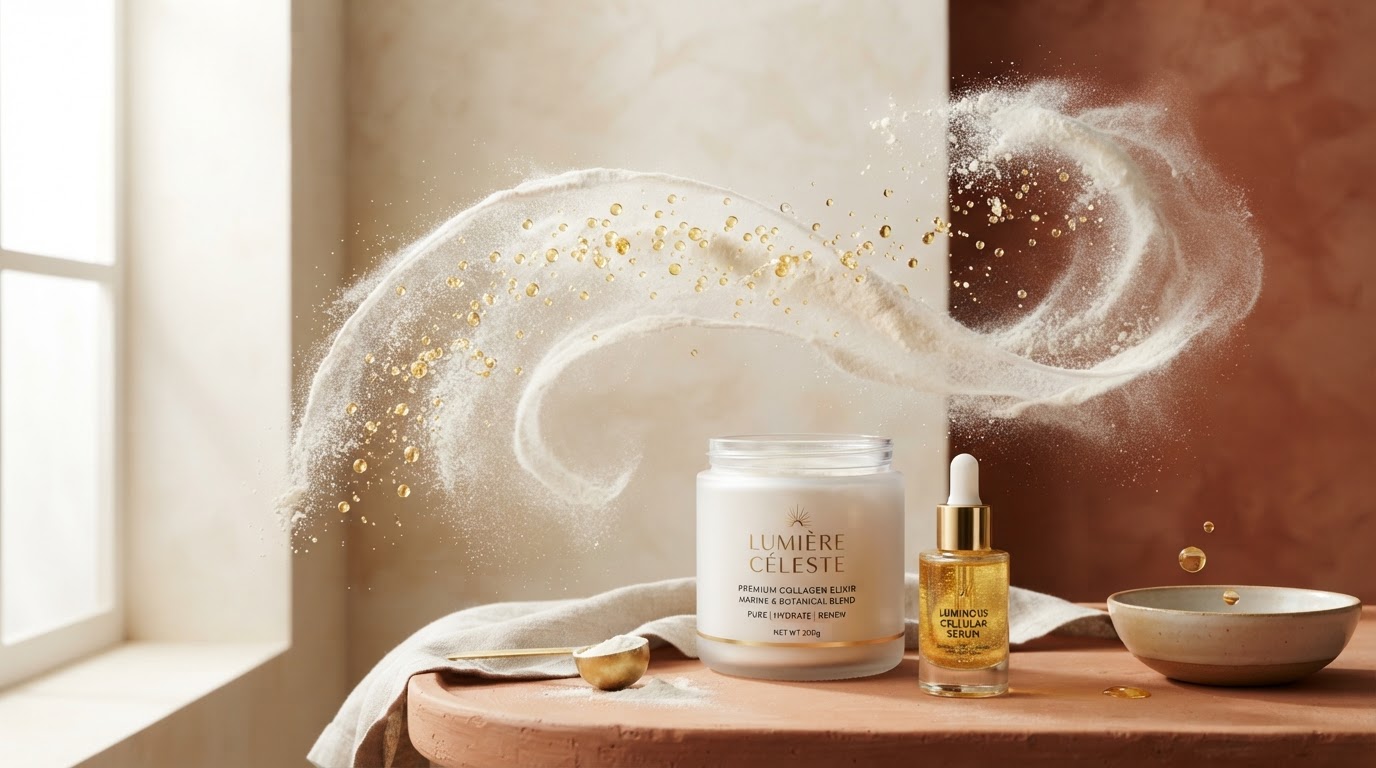
Beauty From Within
Science-backed ingestible ingredients for skin, hair, and nails. We focus on what the clinical data actually shows — not trending actives with weak evidence. Real results come from consistent, well-formulated oral ingredients that support the body's own processes, not overnight magic.
How "Beauty From Within" Actually Works
Collagen Synthesis Support
Oral collagen peptides and vitamin C supply the amino acids and cofactors your body uses to build its own collagen. You're feeding the machinery, not replacing it.
Dermal & Epidermal Hydration
Oral hyaluronic acid and ceramides support the skin's water-binding capacity and barrier lipids — hydration that starts below the surface.
Keratin Production
Silicon, zinc, and biotin support keratin synthesis for stronger hair and nails. These are the structural proteins, not topical coatings.
Barrier Lipids
Oral ceramides reinforce the stratum corneum from within, reducing transepidermal water loss and improving resilience.
Antioxidant Protection
Astaxanthin and vitamin C help manage oxidative stress from UV and pollution — supporting the skin's response to environmental damage.
Gut–Skin Axis
Emerging research connects gut health to skin condition. Some ingestible beauty formulas now include prebiotics or postbiotics alongside actives.
Dose, Form, and Duration Matter
The single biggest mistake in ingestible beauty is assuming the ingredient name is enough. It isn't. The same molecule can work or fail depending on:
- • Dose — most studies use specific daily amounts. Underdosing is the #1 reason a formula "doesn't work."
- • Form — molecular weight of hyaluronic acid, hydrolyzed vs. native collagen, ch-OSA vs. cheap silica. The form determines bioavailability.
- • Duration — most clinical effects appear at 8–12 weeks of consistent daily use. A 30-day trial tells you almost nothing.
Featured Ingredients
Each ingredient below has at least some human clinical data behind it. We note the findings, the effective doses, and the formulation realities — because the form is as important as the name.
Hydrolyzed Collagen Peptides
The most-studied ingestible beauty ingredient. Supplies amino acids (glycine, proline, hydroxyproline) that support the body's own collagen synthesis.
Key Clinical Findings
Multiple double-blind, placebo-controlled trials show measurable improvements in skin elasticity, hydration, and wrinkle depth after 8–12 weeks of daily use. Results are modest but statistically significant — not a facelift in a scoop.
Typical Effective Dose
2.5–10 g daily. Most studies use 2.5–5 g of specific bioactive peptides (e.g., Verisol) or 10 g of standard hydrolyzed collagen.
Formulation & Manufacturing Notes
Hydrolyzed (pre-digested) collagen is essential — native collagen is too large to absorb meaningfully. Peptide molecular weight matters (ideally <3 kDa). Bovine, marine, and porcine sources all have data; marine tends to score well on absorption. Look for branded, clinically-tested peptide fractions if you want to make structure-function claims tied to published data.
Practical Caveats
Collagen is not a complete protein. It won't replace dietary protein. Effects plateau and require continued use.
Oral Hyaluronic Acid
A glycosaminoglycan that binds water and supports dermal hydration. Taken orally, it can increase skin moisture from the inside.
Key Clinical Findings
Several RCTs (including Kawabata et al.) show increased skin moisture and elasticity after 8–12 weeks of oral HA. Effects are real but dose- and molecular-weight-dependent.
Typical Effective Dose
120–200 mg daily. Lower molecular weight HA (typically <500 kDa) appears to absorb better than high-MW native HA.
Formulation & Manufacturing Notes
Molecular weight is the single most important spec. High-MW HA used in topical serums won't absorb well orally. Source (fermentation vs. rooster comb) and purity matter for labeling and allergen concerns. HA is water-soluble and stable in solution but can degrade under harsh processing — avoid high-heat steps.
Practical Caveats
Oral HA is not a replacement for topical hydration. The evidence is promising but the category is still smaller than collagen.
Bioavailable Silicon (Ch-OSA)
Silicon supports keratin production and connective tissue cross-linking. Choline-stabilized orthosilicic acid (ch-OSA) is the most bioavailable oral form.
Key Clinical Findings
Studies on ch-OSA show improvements in hair thickness, nail brittleness, and skin microcirculation after 20+ weeks. Evidence is strongest for hair and nails, weaker for skin.
Typical Effective Dose
5–10 mg of silicon per day (delivered via ch-OSA). Studies typically run 9–12 months for visible results.
Formulation & Manufacturing Notes
Orthosilicic acid (OSA) is the absorbable form, but it's unstable and polymerizes into poorly-absorbed silica. Choline stabilization (ch-OSA) keeps it bioavailable. Avoid cheap silica/horsetail forms if you want to match clinical data — bioavailability is dramatically lower.
Practical Caveats
Results are slow. This is a long-game ingredient. Most consumers won't see changes before 5–6 months.
Ceramides (Plant or Milk-Derived)
Lipids that make up the skin barrier. Oral ceramides can support barrier function and reduce transepidermal water loss.
Key Clinical Findings
Small but growing body of RCTs (e.g., using konjac-derived or rice-derived ceramides) showing reduced dryness and improved barrier markers after 4–12 weeks. Evidence is emerging, not yet as robust as collagen.
Typical Effective Dose
0.6–1.6 mg of plant-derived ceramides daily (often delivered as a branded extract like Ceramosides or Lipowheat).
Formulation & Manufacturing Notes
Source matters — plant (rice, wheat, konjac) and milk ceramides differ in sphingoid base profile. Doses are tiny (milligrams, not grams), which makes them easy to stack but easy to underdose. Stability is good; ceramides are lipids, so they fit cleanly into softgel or liquid lipid formats.
Practical Caveats
Category is still early-stage. Choose a branded, studied extract if you want to reference clinical data.
Vitamin C
Required cofactor for collagen synthesis. Without adequate vitamin C, collagen production stalls regardless of how much collagen you ingest.
Key Clinical Findings
Well-established biochemistry. Oral vitamin C supports collagen synthesis; deficiency (scurvy) causes skin breakdown. Supplemental C in replete populations shows modest skin benefits, not dramatic ones.
Typical Effective Dose
75–90 mg RDA; supplements typically use 250–500 mg. More isn't better — excess is excreted.
Formulation & Manufacturing Notes
Ascorbic acid is the best-studied form. Mineral ascorbates are gentler for sensitive consumers. Vitamin C is notoriously unstable in liquid — oxidation turns it brown and inactive. Use chelated forms (e.g., sodium ascorbyl phosphate) or encapsulated ascorbic acid for liquid formats, and protect from light and heat.
Practical Caveats
Most people in developed countries aren't deficient. The marginal benefit of supplementing C in a beauty formula is real but smaller than marketing implies.
Astaxanthin
A potent carotenoid antioxidant (from Haematococcus pluvialis algae) with evidence for photoprotection and skin barrier support.
Key Clinical Findings
RCTs show reduced UV-induced skin damage markers and improved moisture/elasticity after 4–12 weeks of 4–6 mg/day. It's a complementary photoprotection ingredient, not a sunscreen replacement.
Typical Effective Dose
4–6 mg daily. Natural astaxanthin (from algae) is more bioavailable than synthetic.
Formulation & Manufacturing Notes
Astaxanthin is fat-soluble and highly stable — ideal for softgels or lipid-based liquids. It's a strong pigment (red-orange), which can stain manufacturing equipment and affect finished product color. Source algae-derived, not synthetic, if you want to cite clinical data. Pair with a lipid for absorption.
Practical Caveats
Will not replace sunscreen. Claims should be framed as 'supports the skin's response to UV exposure,' not 'protects from sun.'
Zinc
Essential mineral for keratin production, wound healing, and skin integrity. Deficiency visibly affects skin and nails.
Key Clinical Findings
Strong evidence for zinc's role in skin health; supplementation clearly helps in deficiency. Benefits in zinc-replete populations are smaller and less dramatic.
Typical Effective Dose
8–15 mg daily for supplementation. Higher doses (30+ mg) should be time-limited and supervised — chronic high zinc causes copper deficiency.
Formulation & Manufacturing Notes
Zinc gluconate, citrate, and bisglycinate are well-absorbed; zinc oxide is poorly bioavailable. Zinc can interact with other minerals (iron, calcium) — separate dosing if stacking. Stable in most formats but can taste metallic in liquids; flavor masking is key.
Practical Caveats
Don't megadose. Chronic high-dose zinc depletes copper and can cause neurological issues over time.
Biotin (Vitamin B7)
A B vitamin involved in keratin production. Widely marketed for hair, skin, and nails — but the evidence is thinner than the marketing suggests.
Key Clinical Findings
Biotin supplementation clearly helps in proven deficiency or in specific conditions like brittle nail syndrome. In biotin-replete, healthy people, the evidence for hair/skin benefits is weak. Most people get adequate biotin from diet.
Typical Effective Dose
2.5–5 mg daily in studies on brittle nails. Doses in retail products range wildly from 1 mcg to 10,000 mcg — the latter far exceeds any studied need.
Formulation & Manufacturing Notes
Biotin is water-soluble, stable, and cheap — easy to formulate. The real problem is the marketing-to-evidence gap. High-dose biotin (5,000–10,000 mcg) can interfere with lab tests (thyroid, troponin, vitamin D) — a serious safety issue consumers rarely hear about. Disclose this on the label.
Practical Caveats
Flag the lab-test interference on packaging. Consider whether the dose is justified by evidence or driven by marketing parity. More is not better here.
Stacking & Formulation Considerations
Why These Ingredients Get Combined
- Collagen + Vitamin C + HA — the classic stack. Collagen supplies amino acids, vitamin C is the required cofactor, and HA adds a hydration pathway. Each addresses a different part of the same system.
- Silicon + Zinc + Biotin — the hair-and-nail stack. All three support keratin, but through different mechanisms. Watch the biotin dose.
- Astaxanthin + Vitamin C — antioxidant stacking. Fat-soluble + water-soluble coverage across different compartments.
- Ceramides — stack cleanly with anything. The dose is tiny (milligrams), so they fit into almost any format without crowding the label.
What Brand Founders Should Prioritize
- Evidence first. Pick ingredients with human RCT data at the dose you plan to use. If you want to make claims, the study has to match your formula.
- Form over name. Hydrolyzed collagen, low-MW hyaluronic acid, ch-OSA — the form is what makes the ingredient work. Cheap forms = no results = returns.
- Dose to the data. Use the dose from the study, not the dose that fits your cost target. Underdosing is the most common failure mode.
- Stability. Vitamin C oxidizes, astaxanthin stains, zinc tastes metallic. Choose your format (powder vs. liquid vs. softgel) around stability, not aesthetics.
- Label compliance. Structure-function claims have rules. Biotin lab-test interference should be disclosed. We handle this in formulation.
Building a beauty-from-within product?
We formulate and manufacture ingestible beauty supplements — powders, liquids, softgels, and gummies. Our chemists help you select the right forms, doses, and formats based on the evidence, not the trend.
Book a Formulation CallRealistic Expectations
The Honest Timeline
Most clinical studies on ingestible beauty ingredients run 8–12 weeks minimum, and many run 6–12 months. Measurable changes in skin hydration and elasticity typically appear around the 8–12 week mark with consistent daily use. Hair and nail effects (silicon, zinc) often take longer — 5–6 months is common. If a product promises visible results in two weeks, the evidence isn't there.
Ingestible Beauty Isn't a Standalone
Oral collagen, hyaluronic acid, and antioxidants support the skin from the inside — but they don't replace sun protection, a decent diet, adequate sleep, or a basic topical routine. The best results come from stacking ingestible actives with sensible skincare and sun protection. No supplement outperforms daily sunscreen for preventing visible aging.
What We'd Tell a Brand Founder
Build your formula around ingredients with real dose-response data, use the clinically studied form, and be honest in your marketing about the timeline. Consumers who see results at week 10 become loyal customers. Consumers who were promised week-2 miracles leave bad reviews. We help you build the former.
Want to discuss manufacturing or formulation of a beauty-from-within product? Tell us what you're building.
Get a Free Quote
Fill out the form below and our team will get back to you within 24 hours.
Ready to build or scale your product?
We take you from concept to shelf — custom formulation, low-MOQ manufacturing, and packaging under one roof. No pressure; if we are not the right fit, we will tell you.
