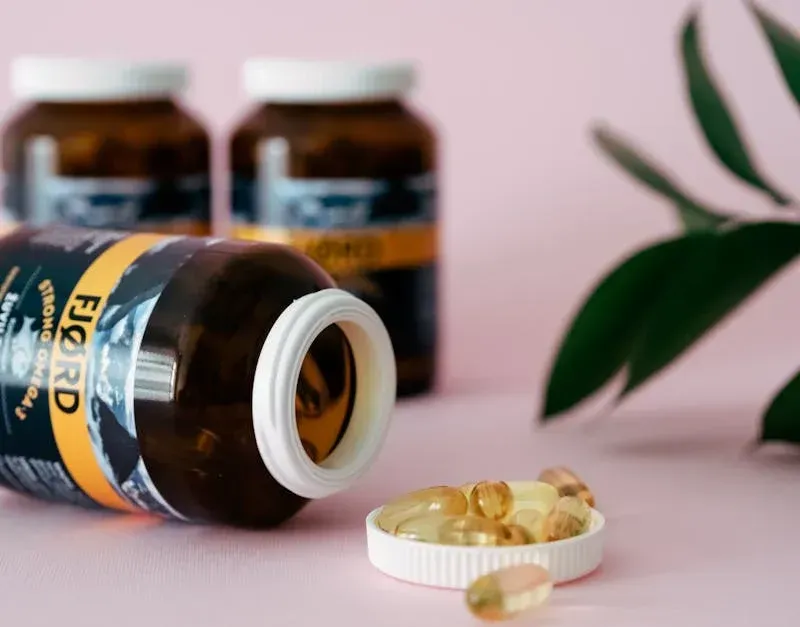
The Ultimate Guide to Private Label Supplements: From Concept to Commercial Success
Introduction 🚀
This guide delivers a concrete, current playbook for established cosmetics and dietary supplement brands seeking private-label capabilities, as well as startups aiming for rapid go‑to‑market timelines with clean-label, organic, and sustainably sourced formulations, and you can consult private label food supplements: a comprehensive buyers guide to choosing a manufacturer for a deeper dive.
You’ll walk away with clear pathway decisions (OEM vs CM vs white‑label), practical QA and compliance practices, development timelines, packaging and labeling strategies, and go‑to‑market playbooks for e‑commerce and retail. We also preview visuals that accompany the guide—a supplier rating table, a product development timeline, and an instructional production video outline—to help you evaluate partners and onboard teams quickly.
As you read, imagine how Ingredientsage sits at the nexus of private-label and contract manufacturing for cosmetics and supplements—offering end‑to‑end sourcing, formulation, packaging, and quality control with a focus on organic and natural ingredients for clean‑label products and faster time to market; for a deeper dive on choosing a manufacturing partner, see private label health supplements: the complete buyers guide to choosing a manufacturer.
Tip: keep this article open as a checklist. Each major section includes practical steps and decision criteria you can apply immediately to current projects and upcoming launches. 💡
Market Dynamics in 2026 🔎
The private label supplements space continues to expand as consumers seek convenience, personalization, and predictable sourcing, with many brands turning to Supliful private label supplements to speed to market.
Key growth drivers include:
Brands exploring a Vox Nutrition private label supplement can leverage platforms that enable rapid experimentation and SKU diversification.
Macro factors shaping supply chains include material volatility and shifting tariffs, which heighten the value of diversified supplier networks and robust quality controls. In 2026, a differentiator is supply chain transparency—not just compliance, but a demonstrable, end-to-end story about where ingredients come from, how they’re processed, and how packaging aligns with sustainability goals.
“Traceability is no longer a luxury—it’s a baseline expectation for regulated products. Brands that can show a transparent, auditable path from farm to label are winning consumer trust and retail preference.”
—Dr. Elena Rossi, Formulation & QA Expert
With this backdrop, your private-label strategy should prioritize robust supplier rating systems, third‑party testing, and agile go‑to‑market plans that align with retailer standards and consumer expectations.
Regulatory Landscape and Compliance 🧭
Understanding the regulatory framework is foundational to private-label success. The core framework remains stability‑driven and risk‑aware: the Dietary Supplement Health and Education Act (DSHEA) defines labeling, safety expectations, and claim limitations; manufacturing must conform to Good Manufacturing Practices (GMP) under 21 CFR Part 111; and labeling must avoid misleading claims while enabling substantiation for any structure/function or health claims.
Recent and ongoing emphasis centers on traceability, COAs (Certificate of Analysis), and facility registrations. Enforcement priorities have shifted toward transparent supply chains, supplier qualifications, and ongoing audits. Expect audits, supplier qualifications, and batch‑specific documentation to be routine rather than exceptional in 2026.
Practical steps you can implement now:
Documentation practices: maintain batch histories, COAs, SDS, and supplier qualification records in a centralized, auditable system.
Audit readiness: adopt a 12‑month calendar of internal pre‑audits focused on GMP compliance, traceability, and record completeness.
Regulatory awareness: Stay current with 2025–2026 guidance on labeling substantiation, allergen controls, and cross‑contamination prevention.
To fortify your posture, consider a standing QA/regulatory watch group that reviews supplier changes, new ingredient filings, and packaging updates. This proactive approach reduces the risk of recalls, rejects, or mislabeling that can erode brand trust.
"A compliant supply chain is a competitive advantage. When you can prove a product’s identity, potency, and purity for every batch, you gain retailer confidence and consumer loyalty."
—Regulatory Affairs Leader, Private Label Coalition
Sourcing & Manufacturing Options ⚙️
Choosing the right sourcing model is foundational to product quality, speed, and scalability. Below are three primary pathways you’ll encounter in 2026, each with its strengths and trade‑offs. For each path, we’ll surface cost considerations, lead times, certifications, regulatory alignment, customization options, MOQs, and scalability. This comparative lens helps you align your product goals with a practical manufacturing strategy.
OEM (Original Equipment Manufacturer) 🔬
Cost per Unit
OEM relationships typically offer lower unit costs at scale because the manufacturer owns the formulation and process, enabling economies of scale and more predictable pricing across SKUs. Initial NREs (non‑recurring engineering) can be substantial, but ongoing per‑unit costs tend to improve as production volumes rise.
Lead Time
OEMs may require longer initial development and qualification periods due to bespoke formulation and process validation. Establishing a stable process can lead to highly efficient ongoing production, but the upfront investment in R&D and regulatory alignment may cause delays in first shipments.
Quality Certifications
OEMs often maintain extensive certifications (GMP, ISO, allergen controls) as part of their core capability. Verify the exact scope of certifications and how they map to your product category (cosmetics vs dietary supplements) and target markets.
Regulatory Compliance
In an OEM arrangement, your regulatory burden rests largely on the terms of the contract. Expect comprehensive documentation, including master manufacturing records (MMRs), batch records, and COAs tied to your label claims and regulatory jurisdictions.
Customization Flexibility
OEMs excel at customization—formulation tweaks, packaging options, and private labels can be integrated into a single line. However, advanced customization may extend lead times and require more extensive validations.
Minimum Order Quantity (MOQ)
MOQs in OEM deals are typically higher, reflecting the scale and capital investment in new formulations. Plans for phased rollouts or line‑extension SKUs can mitigate the impact of large MOQs.
Scalability / Capacity
OEMs are designed for scale but require capacity planning. If your growth trajectory accelerates, ensure the OEM has spare capacity or a clear path to additional lines without sacrificing quality or timelines.
Contract Manufacturer (CM) 🧰
Cost per Unit
CMs typically operate with efficient, repeatable processes that support competitive unit costs, especially for mid‑volume launches. Expect favorable pricing for ongoing production, but be mindful of volume tiers and optional add‑ons (co‑manufacture steps, QA testing packages).
Lead Time
CMs are often able to bring products to market faster than full‑custom OEMs because they leverage established formulations and SOPs. For faster launches, they’re a preferred option when operations are aligned to a predictable demand forecast.
Quality Certifications
Quality systems at CM facilities are strong, with GMP‑compliant operations and third‑party audit readiness. Clarify which certifications apply to your product and whether COAs are batch‑specific or generic for the line.
Regulatory Compliance
CMs provide compliance support for their standard product families, but you’ll still own regulatory claims and substantiation. Ensure the CM’s documentation aligns with your target markets and labeling standards.
Customization Flexibility
CMs offer modular customization—adjusting ingredient lists, dosages, or packaging within defined families. This is often faster than full custom development, though more limited than pure OEMs for radical formulation changes.
Minimum Order Quantity (MOQ)
MOQs are generally more flexible with CM partners, making them suitable for growing brands testing new SKUs or smaller product lines. Negotiate MOQs that align with your product portfolio strategy.
Scalability / Capacity
CMs tend to have scalable capacity and established supply networks. Ensure visibility into capacity expansion plans and lead times for sudden demand spikes to maintain continuity across SKUs.
White-label / Private Label (Fast‑to‑Market) 🌿
Cost per Unit
White-label options typically offer the fastest, lowest-risk path to market with the lowest upfront R&D costs. However, per‑unit pricing can be higher than bespoke OEM/CM solutions because formulations are reused across multiple clients.
Lead Time
Lead times are among the shortest in the industry when leveraging established formulations and stock formulas. The trade‑off is reduced differentiation and limited customization flexibility.
Quality Certifications
White-label suppliers may provide standard certifications, but not every SKU will have full regulatory‑grade validation for every market. Verify the scope and whether COAs are issue‑specific or batch‑level.
Regulatory Compliance
Regulatory compliance is typically predefined by the white‑label catalog. You’ll need to conduct your own substantiation checks if you intend to modify claims or target additional markets beyond the catalog’s scope.
Customization Flexibility
Customization is limited in white‑label programs. Some suppliers allow logo changes and minor label or packaging tweaks, but major changes—such as new dosages or ingredient substitutions—may require moving to CM or OEM arrangements.
Minimum Order Quantity (MOQ)
MOQs are usually low or even zero for introductory private-label lines, enabling quick testing of product-market fit. Be mindful of incremental costs for shorter production runs and relabels as you grow.
Scalability / Capacity
White‑label routes scale well for rapid launches, but long‑term growth might necessitate moving to a CM or OEM to maintain price discipline and customization flexibility as volumes rise.
Quality Assurance, Testing & Certifications ✅
Quality assurance (QA) and testing are non‑negotiable in private label. Consumers and retailers expect identity, potency, purity, and safety assurances for every batch. Third‑party testing, COAs, and robust supplier qualification programs are the three pillars of credible QA in 2026.
Key components include:
Third‑party testing (e.g., USP, NSF, ISO) to verify identity, potency, contaminants, and allergen controls.
COA requirements with batch‑specific documentation that ties to your finished product labeling and claimed ingredients.
Provider audits and ongoing supplier qualifications to ensure raw materials meet your standards for purity and consistency.
For brands pursuing clean‑label positioning, COAs and supplier transparency are especially critical. Consumers are becoming adept at recognizing gaps in testing and traceability, so a well‑documented QA program strengthens brand credibility and reduces the risk of recalls.
Pro tip: integrate a COA workflow into your ERP or product lifecycle management (PLM) system so batch data automatically surfaces during QC release. If COAs are delayed, you can still progress with a hold‑point approach that prevents shipments until documentation is complete.
"Third‑party testing isn’t optional—it's a trust signal. When a product passes independent verification, it becomes easier to substantiate claims and win consumer confidence."
—QA Director, Private Label Wellness Brands
Comparison of Sourcing Options for Private Label
Product Development & Formulation 🧪
Product development is where science meets consumer insight. In 2026, clean‑label formulations, allergen controls, and transparent ingredient sourcing are central to winning shelf space and online conversion. The development phase should align with regulatory boundaries, label claims, and stability considerations to preserve product integrity over its shelf life.
Key considerations include:
Ingredient selection with attention to organic, natural, and food‑based sources where possible. Prioritize suppliers with transparent supply chains and provenance documentation.
Allergen controls and cross‑contact prevention across facilities and packaging lines.
Stability testing to estimate shelf life and packaging compatibility, ensuring that color, scent, and potency remain consistent through distribution channels.
Label claims & substantiation that align with regulatory standards and consumer expectations, including disclaimers where needed.
A practical development plan often includes a phased approach: discovery of ingredients, formulary sketch, bench trials, pilot runs, and final validation. The end result should be a well‑documented master formulation plus a specification sheet that travels with every batch—from raw material receipt to finished product labeling.
Stability and packaging interplay: consider how packaging materials (e.g., light‑fast glass vs. opaque HDPE, moisture barriers) impact formulation stability and consumer experience. You’ll want to validate packaging compatibility early to avoid costly reworks later.
Branding, Packaging & Labeling 🎨
Your branding must be compliant and compelling. In 2026, consumers respond to authenticity, sustainability, and digital‑ready packaging features such as QR codes that link to COAs, test results, and supply chain stories. The label should communicate purpose, usage, dosage, and safety with clarity and brevity while remaining compliant with regulatory guidelines.
Best practices include:
Sustainable packaging options, including recyclable or reusable packaging, should align with clean labeling and lifecycle considerations.
Digital labeling strategies that maintain label accuracy across SKUs and help consumers access COAs via QR codes or micro‑text on the packaging.
Consistency across channels—ensure branding, labeling, and packaging align across Amazon, DTC, and retail SKUs to prevent consumer confusion.
For privacy of data and consumer trust, consider a QR‑enabled COA access plan that guides shoppers to batch‑specific documentation. This elevates transparency and supports substantiation of claims with easy‑to‑verify data.
"A strong label is more than compliance—it’s a storytelling tool. It communicates value, safety, and provenance in a few seconds of shelf exposure."
—Brand Strategist, Consumer Wellness
Pricing, Margins & Costing 💸
Private‑label profitability hinges on understanding all cost inputs and how they scale with volume. Break down cost components: raw materials, packaging, manufacturing, QA testing, and logistics. Add in MOQs, supplier pricing models, and landed costs to see true profitability across SKUs and channels.
Rule of thumb for budgeting:
Lock in raw material costs with long‑term supplier agreements where possible to mitigate volatility.
Negotiate packaging costs through bulk orders or shared SKUs to leverage economies of scope.
Factor QA testing as an ongoing operating expense—not a one‑time event—especially for first batches and new SKUs.
Pricing strategy should balance market expectations, channel margins, and formulation privacy. Consider tiered pricing for launch vs. growth phases, with a clear plan for increasing value through product differentiation (claim substantiation, improved packaging, enhanced sustainability).
Example: A mid‑volume private‑label supplement with moderate packaging costs and standard QA tests might target a landed cost per unit in the $1.50–$3.00 range, with MSRP guidance aligned to category norms. Always model multiple scenarios to understand break-even points across MOQs and lead times.
Go‑to‑Market Strategy 🚀
Your channel mix will shape product design and marketing. Popular routes include Amazon, Shopify‑based DTC storefronts, wholesale partnerships, and private‑label distribution through retailers. Each channel has distinct requirements for packaging, branding, and claims substantiation, so plan the product development and labeling to fit the target channel from the outset.
Launch planning should emphasize pre‑launch sampling, authentic reviews, and substantiation for all claims. A well‑designed marketing funnel—awareness, consideration, conversion, and loyalty—must be integrated with a testing plan for messaging, packaging variants, and price points. Use accelerated A/B testing to optimize product copy, imagery, and value propositions across channels.
Key KPIs to monitor include acquisition cost (CAC), customer lifetime value (LTV), gross margin, order frequency, and return/recall rates. Build feedback loops into operations so the product can iterate quickly based on consumer response and retailer input.
"Speed to market matters, but speed without a plan for substantiation and packaging integrity can backfire. A disciplined go‑to‑market plan delivers sustainable growth."
—Growth Analytics Lead, Private Label Retail
Supply Chain Transparency & Sustainability ♻️
Today’s consumers demand transparency—about ingredient sourcing, processing, and packaging lifecycle. A transparent supply chain reduces risk, supports sustainability goals, and strengthens brand loyalty. Your strategy should include supplier rating systems, lifecycle assessments, and supplier diversity initiatives where possible.
To operationalize transparency, implement:
Supplier rating systems monitor criteria such as regulatory compliance, traceability, lead times, and sustainability practices.
Lifecycle impact assessments to compare environmental footprints of packaging options and materials.
Ethical sourcing policies, including audits and supplier code of conduct alignment.
Digital tools can help share batch‑level COAs with consumers and retailers, reinforcing trust and differentiation in a crowded market.
Implementation Checklist & Timelines 🗂️
Concept to market is a staged journey. Below is a practical, high‑level timeline you can adapt to your project. Each stage includes key decisions and required documents to keep momentum and mitigate risk.
Concept & brief (2–4 weeks): define product objective, target profile, and regulatory jurisdiction.
Sourcing selection (2–6 weeks): choose OEM, CM, or white‑label path; begin supplier qualifications.
Formulation & development (6–12 weeks): finalize master formulation, allergen controls, and ingredient specs.
QA testing & qualification (4–8 weeks): conduct COAs, third‑party tests, and shelf‑life validation.
Packaging & labeling (2–6 weeks): finalize artwork, label claims, and QR code integration for COAs.
Pilot production (2–4 weeks): run a pilot batch to validate process and packaging line readiness.
Regulatory filing & launch (2–6 weeks): secure registrations/notifications as required and execute go‑to‑market plan.
Ownership and documentation should be clear at each milestone: concept document, supplier qualification records, formulation specs, COAs, SDS, packaging specs, and a launch plan. Build contingency plans to manage supply‑chain disruptions, material shortages, and regulatory changes.
Outline
This outline guides onboarding and training for new manufacturing partners.
Covers core production steps, quality checkpoints, and safety practices to ensure teams can execute formulas consistently and safely.
Intro: an overview of private-label benefits and the partnership model, with an emphasis on clean-label and sustainability.
Raw materials: sourcing criteria, supplier verification, COA validation, and allergen controls.
Formulation & process: step‑by‑step mixing, encapsulation or suspension, and fill‑finish operations.
Quality control: sampling plan, in‑process checks, batch release criteria, and COA documentation.
Packaging & labeling: artwork review, packaging integrity tests, and QR code integration for COAs.
Logistics & compliance: storage, shipping, and regulatory considerations by market.
Q&A: common failure modes and troubleshooting signals for production teams.
For maximum impact, pair with a quick reference sheet and a supplier onboarding checklist to accelerate alignment with new partners.
Conclusion & Next Steps
This guide provides a practical framework for navigating the private label supplements landscape in 2026. Whether you’re optimizing an existing line, launching a new product, or seeking a one‑stop partner for formulation, packaging, and QA, the strategies above are designed to help you move from concept to commercial success with confidence. Revisit each section as you advance through development milestones, and use the visuals to guide partner selections, timelines, and training programs.


