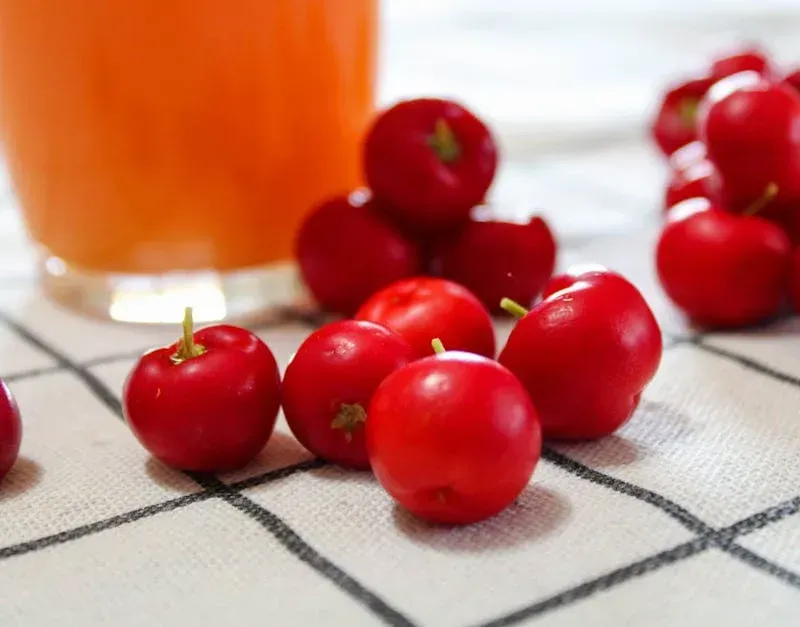
Acerola Cherry Powder Organic: The Essential Buyers' Guide to Quality, Purity, and Value
Executive Summary and Scope 🍒
Organic acerola cherry powder has emerged as a versatile ingredient for cosmetics and dietary supplements, prized for its natural vitamin C punch, antioxidant profile, and clean-label appeal. This buyers' guide equips established brands, contract manufacturers, and private-label partners with a practical framework to evaluate quality, ensure compliance, and optimize value from organic acerola powders. You will find concrete profiles that illustrate sourcing and processing realities, guidance on label reading and dosage, safety considerations, and market dynamics shaping pricing and supplier selection.
Key buying signals to prioritize include verified certifications, comprehensive COAs, transparent origin and processing details, stable vitamin C per serving, absence of unwanted additives, and robust packaging that preserves potency, such as what is acai berry extract? discovering the superfood sensation.
Holistic quality signals: certifications, COAs, traceability, and testing for contaminants.
Formulation alignment: vitamin C per serving, processing method, and additive profile.
Supply chain resilience: origin diversity, packaging formats, and scalability for private-label lines.
Market posture: clean-label demand, organic farming trends, and sustainability focus.
For contract manufacturers and private-label partners, these signals translate into predictable quality, faster development cycles, and reliable inclusion in cosmetic and supplement lineups that meet consumer expectations for organic and clean-label products.
What qualifies as 'organic' acerola cherry powder?
Organic Acerola Cherry Powder Naturalis is produced from acerola fruits cultivated under organic farming systems and processed without synthetic inputs that are prohibited in organic standards.
Typical organic signals buyers should verify on labels include the presence of a recognized organic certification logo, a valid certifier name or code, and clear statements about organic origin and processing. Look for terms such as organic acerola powder, organic fruit powder, and organic certification references on the ingredient statement. Be cautious of ambiguous terms like "natural" or "plant-based" without certification, as organic status hinges on verified compliance rather than marketing phrasing.
Beyond the label, effective organic sourcing involves traceability from farm to powder, documented farming practices, and transparent processing controls. For a cosmetic or dietary supplement brand, the assurance that no synthetic pesticides, irradiation, or chemical solvents were used in cultivation and drying is essential to protecting product integrity and consumer trust.
Certifications, compliance, and third-party testing
Certification and third-party testing underpin confidence in organic acerola cherry powder.
COA availability includes details on vitamin C content per serving, moisture content, microbiological specifications, heavy metals, pesticide residues, and microbial limits.
NOP/EU organic verification with chain of custody and farm/source documentation to ensure organic integrity from harvest to packaging.
Non-GMO status confirmation and traceability records for the supply chain.
Raw material traceability documentation enables recalls or safety investigations if needed.
"Reliable COAs and traceability are non-negotiable for private-label partnerships. They ensure consistency, safety, and regulatory compliance across batches."
"The market increasingly expects organic certification and third-party testing as standard practice, not a value-add. Vendors that provide transparent test results and clear methodology win long-term trust."
When evaluating suppliers, request copies of current COAs from an accredited laboratory, inquire about the testing methodology (including limits of detection for contaminants), and confirm the certifier's status and the COA's date. A live certificate of analysis that accompanies each lot and a clear description of testing methods helps prevent misinterpretation and facilitates smoother audits for regulatory submissions or private-label approvals.
Sourcing, processing, and packaging practices
The following profiles illustrate two common organic acerola powder formats and their typical supply chain characteristics. Use these profiles to benchmark offerings, understand cost drivers, and tailor private-label specifications.
Profile A: Freeze-dried organic acerola powder — origin Brazil — COA available — 1 kg pouch — no additives — Vitamin C ~600 mg per 2 g
Profile A represents a premium, minimally processed option favored for product stability and purity. Freeze-drying preserves native vitamin C and other phytonutrients with minimal thermal degradation, yielding a powder that is typically light, airy, and highly reactive to moisture. The origin Brazil indicates sourcing from a long-standing acerola corridor with established post-harvest handling for organic products. A 1 kg pouch packaging format supports both private-label SKUs and trial runs without excessive upfront capital. The absence of additives aligns with clean-label positioning, while the vitamin C content of approximately 600 mg per 2 g serving demonstrates strong functional value per serving. A COA is available for audit and batch-level traceability, enabling confidence in claims for potency and purity.
Practical considerations for Profile A include ensuring airtight, moisture-resistant packaging to preserve potency, selecting appropriate desiccants, and confirming storage recommendations on the label. Retail-ready options often leverage this format for high-end formulations in daily supplement routines or antioxidant-boosting cosmetic serums that demand minimal additional excipients.
Profile B: Spray-dried organic acerola powder with maltodextrin — origin Peru — COA available — 500 g bottle — includes maltodextrin—Vitamin C ~420 mg per 2 g
Profile B reflects a more cost-efficient, highly processable variant that uses spray-drying with maltodextrin as a drying aid and carrier. The Peru origin suggests sourcing from a different climatic profile and supply chain network, which can impact flavor, solubility, and particle size. A 500 g bottle is a common private-label packaging choice for startups seeking rapid formulation cycles. The inclusion of maltodextrin lowers moisture sensitivity and improves flowability, which can be advantageous for capsules, blends, and ready-to-mix products. The vitamin C content of roughly 420 mg per 2 g serving remains strong but lower than Profile A, consistent with the drying and carrier choice. COA availability remains essential to verify batch-to-batch consistency and extract purity.
When considering Profile B, assess how maltodextrin interacts with your formulation goals, including potential allergen statements, sugar content considerations, and label declarations. This option may offer a more favorable price-per-gram of vitamin C while still delivering organic credentials when paired with proper COA and traceability documentation.
Label reading, dosage guidance, and usage scenarios
Understanding label statements and recommended serving sizes helps ensure that end products deliver consistent nutrient benefits while maintaining clean-label positioning. The following profiles illustrate typical usage scenarios in supplements and fortified foods.
Profile C: 2 g serving, ~550 mg vitamin C; no additives; organic certification disclosed on label
Profile C reflects a straightforward, high-purity presentation. A 2 g serving provides approximately 550 mg of vitamin C, with no additives beyond the organic acerola powder itself. The organic certification is clearly disclosed on the label, reinforcing consumer confidence in clean-label claims. This profile is well-suited for daily vitamin C supplementation, antioxidant boosters in skincare formulations, or fortification of functional foods that emphasize natural sources of nutrients. Practical usage notes include ensuring accurate scoop sizes, batch-specific COA verification, and alignment with daily value targets as defined by regulatory guidance in your target market.
Profile D: 2 g serving, ~380–400 mg vitamin C; may include anti-caking agent; allergen/ingredient disclosures
Profile D demonstrates a more pragmatic approach that may incorporate a small anti-caking agent and explicit allergen disclosures. A 2 g serving yields 380–400 mg of vitamin C, which remains a meaningful contribution to daily intake in many formulations while supporting improved powder flow for manufacturing. Labels should clearly disclose any anti-caking agents and ensure that allergen declarations cover potential cross-contact and ingredient sources. This option can be attractive for cost-conscious private-label programs where facility controls and labeling clarity are essential selling points. For formulators, maintain consistency in vitamin C per serving across lots to preserve dosing accuracy and product claims.
Safety, storage, and shelf life
Safety and shelf life are core considerations for any acerola powder used in cosmetics or dietary supplements. Key points include allergen awareness, citrus-related sensitivities, and robust storage conditions to preserve potency and prevent contamination.
Allergen considerations— even though acerola itself is fruit-derived, cross-contact with citrus or other allergen-containing facilities should be disclosed and managed through supplier audits and facility certifications.
Storage conditions— store in a cool, dry, dark place away from direct heat and moisture. Use airtight, moisture-barrier packaging and consider desiccants for long-term stability.
Shelf life expectations— typical shelf life ranges from 12 to 24 months when stored properly, with a gradual decline in potency over time. Manufacturers should reference COA-documented lot-specific stability data when establishing expiry dates.
Effective quality management for acerola powder also involves monitoring for color changes, caking, or aroma shifts that might indicate moisture ingress or degradation. In gummies, serums, or face care formulations, compatibility with other ingredients and the impact on texture and appearance should be evaluated during early product development.
Market trends, pricing, and supplier considerations
The organic acerola powder sector is shaped by a convergence of clean-label demand, organic farming expansion, and the need for reliable private-label formation timelines. Key market drivers include consumer preference for natural sources of vitamin C, demand for regenerative farming practices, and the expansion of private-label capabilities that support faster go-to-market cycles for cosmetics and dietary supplements.
Pricing dynamics are influenced by origin, processing method, packaging size, and COA rigor. Freeze-dried powders (Profile A) command a premium due to retention of labile nutrients, while spray-dried options (Profile B) offer cost advantages and stable handling.
Supply chain considerations include weather-related impacts on fruit yield, certifications, and the capacity of farms to maintain organic compliance across harvests. Diversified sourcing from Brazil and Peru can mitigate single-origin risk while aligning with customer preferences for specific processing formats.
Consumer trends lean toward sustainable and regenerative farming narratives, with brands seeking transparent sourcing stories and third-party testing as proof of authenticity and quality.
Profile E and Profile F illustrate how market positioning translates into packaging and price strategy. The premium freeze-dried option from Brazil (Profile E) delivers a higher vitamin C per serving, while the budget spray-dried option from Peru (Profile F) emphasizes affordability with adequate vitamin C and robust COA documentation. For brands, the choice between these profiles hinges on target price points, formulation requirements, and consumer expectations for purity and convenience.
Profile E: Premium freeze-dried option (Brazil origin) — 650 mg vitamin C per 2 g; 1 kg pouch
This profile represents a high-value option aimed at products demanding maximum potency and minimal additive load. Freeze-drying preserves nutrient integrity and flavor, supporting stronger antioxidant claims. The 1 kg pouch format aligns with higher-volume private-label programs or stockkeeping for frequent product launches. Organic certification and a robust COA contribute to a premium positioning in both dietary supplements and luxury skincare lines. Expect a higher price point reflecting premium processing and shelf-stable packaging that minimizes potency loss.
Profile F: Budget spray-dried option (Peru origin) — ~380 mg vitamin C per 2 g; 500 g bottle
Profile F targets cost-sensitive applications while maintaining organic credentials and reliable testing. The spray-dried process with maltodextrin supports easy formulation into capsules, tablets, or ready-to-dispense blends. The 500 g bottle is a practical choice for startups testing new SKUs or for ongoing private-label programs seeking lower upfront costs. While vitamin C per serving is lower than Profile E, the combination of COA accessibility, solid organic status, and scalable packaging offers a compelling value proposition for entry-level launches.
Practical buying guide and recommendations
To make informed, results-driven purchasing decisions for organic acerola powder, use the following structured approach. The guide prioritizes transparency, safety, and alignment with your product goals.
Verify organic certification status by confirming the certifier name, certification scope, and validity date. Look for consistent organic claims across the ingredient statement and packaging.
Request a current COA for each lot and review the method details, including vitamin C per serving, moisture content, microbial specs, heavy metals, and pesticide residues. Ensure the COA lab is accredited and that results are traceable to the specific production lot.
Assess the processing method and additives, and determine if the powder is freeze-dried or spray-dried. Note any carriers or anti-caking agents and verify allergen disclosures on the label.
Check origin and supply chain transparency and require farm/source documentation and traceability records. For private-label programs, establish a supplier qualification checklist that includes GMP compliance and facility audits.
Evaluate packaging format and shelf stability for your product line. Consider packaging that maintains potency, is tamper-evident, and is compatible with your formulation and production line.
Request samples and perform in-house testing in your own formulation environment to verify performance, solubility, and color impact. Use pilot batches to confirm inclusion rates and regulatory claims.
Engage in a phased validation plan that includes stability studies, compatibility testing with other ingredients, and consumer perception testing if used in finished products.
Incorporate expert input where possible.
"Acerola powder with verified organic status, consistent COAs, and clear packaging claims reduces development risk and accelerates time to market for private-label programs."
Working with a knowledgeable contract manufacturer like Ingredientsage can help you navigate these steps efficiently. Their end-to-end capabilitie from sourcing to final packaging and quality contro support scalable launches for cosmetics and supplements while maintaining clean-label integrity and organic assurance.
Bottom line for buyers
For brands pursuing organic acerola cherry powder, prioritize verified organic certification, robust COAs, clear origin and processing details, and transparent packaging. Consider both premium and budget formats to balance potency, cost, and go-to-market timelines. By aligning with reputable suppliers and leveraging expert guidance, you can deliver products that meet consumer expectations for organic, natural, and clean-label ingredients while maintaining rigorous safety and quality standards. 🍃


